
Botanische Wandkunst-Ideen für ein ruhigeres, grüneres Zuhause
Francisco Barbero
Es gibt einen Grund dafür, warum ein einzelner gepresster Farn oder eine lockere Tuschezeichnung einer Pfingstrose einen ganzen Raum zur Ruhe bringen kann. Wir sind darauf programmiert, uns in der Nähe von wachsenden Dingen zu entspannen. Ein Gartenbauökonom der Texas A&M, der dieses Thema erforscht, drückt es einfach aus: Die Nähe zur Natur und zum Grün hilft dabei, den Cortisolspiegel (das Stresshormon) zu senken, und dieselbe beruhigende Wirkung zeigt sich, egal ob man eine echte Pflanze pflegt oder sie einfach nur betrachtet. Kunst zählt. Wenn Sie sich also ein ruhigeres, grüneres Zuhause wünschen, aber jede Sukkulente, die Sie kaufen, eingeht, sind botanische Wandkunst-Ideen die mühelose Alternative: volles Grün, kein Gießen.
Dies ist ein Überblick darüber, was wirklich funktioniert – Raum für Raum, anhand von vier Stilrichtungen: gepresste Botanik, Vintage-Botanik-Illustrationen, moderne Linienkunst von Blättern und Blumenfotografie. Gegen Ende finden Sie zudem einen kurzen, ehrlichen Ratgeber, woran man einen hochwertigen Kunstdruck erkennt, damit das Stück, in das Sie sich heute Abend um 23 Uhr verlieben, auch in einem Jahrzehnt noch gut an der Wand aussieht. Erwarten Sie konkrete Details: eine hochwertige, von Designern ausgewählte Verarbeitung, die 2/3-Regel, eine vollständige Größenauswahl und naturgetreue Farben.
Vier botanische Wandkunst-Ideen und die Räume, in denen sie am besten wirken
Die meisten floralen Motive lassen sich in eine von vier Kategorien einteilen. Wenn Sie wissen, zu welcher Sie sich hingezogen fühlen, wird jede weitere Entscheidung einfacher – von der Rahmenfarbe bis hin zur Anzahl der Bilder, die Sie aufhängen.
Gepresste Botanik: ruhig, echt, ein wenig altmodisch
Ein gepresster Olivenzweig, ein flacher Mohn, drei Grashalme auf cremefarbenem Grund. Botanische Motive im Press-Stil wirken handgemacht und persönlich, weshalb im Internet oft gefragt wird, ob die Blumen echt sind. Bei einem hochwertigen Kunstdruck werden sie von echten Exemplaren reproduziert, sodass Sie die zarte Äderung und die unregelmäßigen Kanten erhalten, ohne das Verblassen, unter dem echte gepresste Blumen nach ein oder zwei Jahren an der Wand leiden würden. Gepresste Optiken passen in Schlafzimmer, Leseecken und schmale Flure, in denen Sie Sanftheit statt Dramatik suchen. Eine vertikale Reihe von drei 8x10-Zoll-Bildern in einem Flur bewirkt mit sehr wenig Aufwand viel.
Vintage-Botanik-Illustration: der Zeitlose
Diese detaillierten Darstellungen einer einzelnen Pflanze, von der Wurzel bis zur Blüte, mit dem Artnamen in feiner Schrift, entstammen einer jahrhundertealten Tradition. Die Royal Botanic Gardens, Kew, die seit über 200 Jahren eigene Künstler beschäftigen, erklären, dass eine gute botanische Tafel mehr nützliche Details zeigen kann als ein Foto, indem sie genau erfasst, wie ein Blatt am Stängel ansetzt oder Details, die kleiner als 2 mm sind. Genau dieses Erbe sorgt dafür, dass sich eine Vintage-Botanik-Illustration in jedem Raum geerdet anfühlt. Sie verleiht einem Esszimmer Halt, bringt Wärme in ein Heimbüro und verdient ihren Platz im Eingangsbereich. Als Raster aus vier oder sechs Bildern in passenden Rahmen aufgehängt, entfaltet sie eine echte Präsenz.

Moderne Linienkunst von Blättern: der Favorit der Minimalisten
Monstera-Blätter in einer einzigen Linie, abstrakte Stängel in Schwarz auf Weiß, ein Hauch von salbeifarbenen Formen. Moderne Linienkunst ist die florale Wanddekoration, mit der man am leichtesten leben kann, da sie visuell fast kein Gewicht hat. Sie passt gut in Küchen, Badezimmer und kleine Wohnungen und verzeiht es, wenn sie neben auffälligen Fliesen oder einem belebten Fliesenspiegel hängt. Ein übergroßer 24x36-Zoll-Blattdruck kann eine ganze kahle Wand in einer Mietwohnung einnehmen, ohne dass Sie sich auf etwas Kompliziertes festlegen müssen.
Blumenfotografie: Farbe, wenn Sie sie wollen
Eine Makro-Tulpe, ein Lavendelfeld, eine Wand voller Dahlien, so nah fotografiert, dass man den Tau sieht. Fotografie ist die Kategorie, in der florale Motive ihre Sättigung erhalten. Das ist also die richtige Wahl für Räume, die flach wirken und in denen Sie einen echten Farbtupfer benötigen. Sie passt perfekt in Wohnzimmer, Treppenhäuser und überall dorthin, wo genug Wandfläche für große Formate vorhanden ist. Da die Farbe die Hauptarbeit leistet, sollten Sie den Rahmen schlicht halten und die Blüte für sich sprechen lassen.
Wenn Sie verschiedene Stile ausprobieren möchten, ist das Durchstöbern einer einzelnen, kuratierten Kollektion für florale & botanische Wandkunst der schnellste Weg, um zu sehen, welche Stilrichtung wirklich zu Ihrer Farbpalette passt, anstatt auf dem Handy-Bildschirm zu raten.
Raum für Raum: Wo welcher Stil sich auszahlt
Derselbe Druck kann in einem Raum harmonieren und in einem anderen untergehen. Hier erfahren Sie, wo florale Motive am besten zur Geltung kommen.
- Schlafzimmer. Hier ist Sanftheit und Ruhe gefragt. Denken Sie an blasse gepresste Botanik oder gedämpfte florale Motive in Salbei, Puderrosa und Creme über dem Kopfteil. Ein Paar 16x20-Zoll-Drucke, die das Bett flankieren, wirkt durchdacht und symmetrisch. Unsere Schlafzimmer-Wandkunst-Kollektion ist genau mit Blick auf diesen Maßstab und diese Palette zusammengestellt.
- Wohnzimmer. Das ist Ihre Statement-Wand. Ein großes 24x36- oder 28x40-Zoll-Blumenbild über dem Sofa oder ein ausgewogenes Set aus zwei Bildern verleiht dem Raum einen klaren Blickpunkt.
- Küche und Esszimmer. Kräuterstudien, Zitrusfrüchte und botanische Früchtedarstellungen gehören hierher. Sie wirken fröhlich, ohne zu aufdringlich zu sein, und kleine 11x14-Zoll-Drucke füllen die Lücken zwischen Schränken und Fenstern.
- Badezimmer. Dampf ist der Feind billiger Rahmungen. Ein gerahmtes botanisches Bild mit einer bruchsicheren Front und einer versiegelten Rückseite hält deutlich besser als ein offenes Poster in der Nähe der Dusche.
- Heimbüro. Grün in Ihrem Sichtfeld ist stiller Helfer. Halten Sie es ruhig: Linienkunst oder eine einzelne botanische Tafel hinter Ihrem Monitor – nichts, was so unruhig ist, dass es von Ihrem Bildschirm ablenkt.
- Flur und Treppenhaus. Lang, schmal, oft ignoriert. Eine vertikale Reihe von 3 bis 5 passenden Drucken verwandelt ungenutzten Raum in etwas, bei dem es sich lohnt, innezuhalten.
Wie man hochwertige Blumendrucke auswählt (das Teil, das die meisten Ratgeber auslassen)
Inspiration ist die leichtere Hälfte. Der schwierigere, wichtigere Teil besteht darin, zu wissen, wie man hochwertige Blumendrucke wählt, damit das Stück über Jahre hinweg Farbe und Ausstrahlung behält. Vier Dinge unterscheiden einen Druck, den Sie auch nach 10 Jahren noch lieben werden, von einem, den Sie nach 18 Monaten unauffällig entfernen.

1. Papierstärke und Archivtinten
Dünnes Papier wellt sich, bekommt Dellen und wirkt hinter Plexiglas billig. Ein schwereres Papier liegt flach und fühlt sich wertig an. Ein guter Maßstab ist ein dickes, substanzielles Papier, erhältlich in matt oder seidenmatt, das lange hält, anstatt wie normales Posterpapier zu vergilben. Die Tinte ist genauso wichtig. Archivfeste, lichtbeständige Tinten sorgen dafür, dass Grüntöne grün bleiben und Rosatöne nach ein paar Jahren im Tageslicht nicht ins Orange driften. Wenn ein Angebot Ihnen weder die Papierstärke noch die Archivqualität der Tinte nennt, werten Sie dieses Schweigen als Antwort.
2. Naturgetreue Farbe
Ein botanischer Druck steht und fällt mit der Farbgenauigkeit. Salbei sollte als Salbei wahrgenommen werden, nicht als Grau. Eine korallenrote Pfingstrose sollte nicht als blasses Lachsrosa ankommen. Genau das ist der Standard, den botanische Künstler seit Jahrhunderten anstreben: Kew stellt fest, dass ein geschulter Künstler das echte Exemplar untersucht, um sicherzustellen, dass die Darstellung bis in jede Schattierung lebensnah ist. Diese Genauigkeit möchten Sie auch bei einem Druck, was durch gutes Farbmanagement entsteht, nicht durch Zufall. Achten Sie, wenn möglich, auf ein klares, gut ausgeleuchtetes Produktbild statt auf ein überfiltertes und lesen Sie die Größenangaben, damit Sie wissen, was Sie tatsächlich erhalten.
3. Rahmen und Passepartout
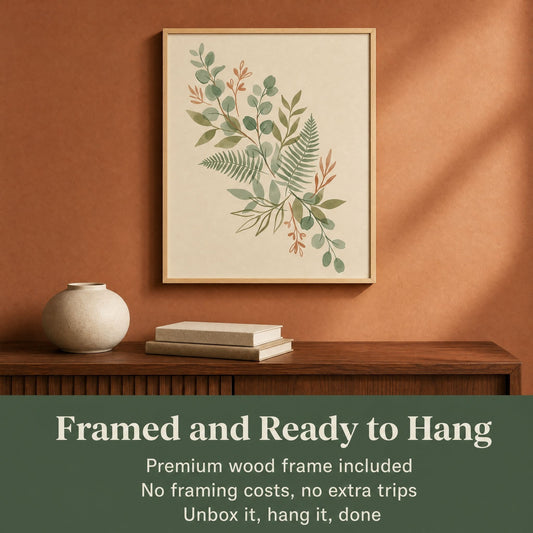
Beim Rahmen wird am häufigsten an der Qualität gespart. Ein paar Dinge, die Sie prüfen sollten: Ist der Rahmen aus Massivholz statt aus hohlem, geformtem Kunststoff? Bei gerahmten Sparkycare-Bildern besteht der Rahmen aus massivem Kiefernholz in Weiß, Naturholz, Dunkelholz oder Schwarz, sodass er echtes Gewicht und rechtwinklige Ecken hat. Ist die Front aus bruchsicherem Plexiglas statt aus Glas? Plexiglas übersteht den Versand und einen Stoß an die Wand, ohne zur Gefahr zu werden – das ist wichtig in Schlafzimmern oder Kinderzimmern. Und kommt das Bild fertig zum Aufhängen an, mit montierter Hardware, ohne zusätzlichen Gang zum Einrahmer? Ein botanisches Bild, das Sie in fünf Minuten aufhängen können, ist eines, das auch tatsächlich an die Wand kommt.
4. Maßstab für die Wand
Der häufigste Fehler ist die Wahl zu kleiner Formate, wodurch Kunst wie eine Briefmarke an der Wand verloren wirkt. Designer stützen sich auf die 2/3-Regel, die Apartment Therapy als die goldene Regel für die Größe von Kunst über einem Sofa oder Bett bezeichnet: Ihr Bild, oder Ihre Gruppierung als ein Block betrachtet, sollte etwa zwei Drittel der Breite des darunter stehenden Möbelstücks einnehmen. Bei einem Standard-Sofa von 84 Zoll (ca. 213 cm) deutet dies auf etwa 56 Zoll (ca. 142 cm) Kunst hin – deshalb sieht ein 24x36- oder 28x40-Zoll-Druck oder ein Paar davon dort meist richtig aus. Hängen Sie die Unterkante etwa 6 bis 8 Zoll (15 bis 20 cm) über das Möbelstück. Eine volle Größenauswahl bis zu 28x40 Zoll zu haben, macht es einfach, diese Proportionen zu treffen, ohne Kompromisse eingehen zu müssen.
Ein kleineres Detail, das es wert ist, gewusst zu werden: Ein echter Druck wird normalerweise mit einem Nachweis für seine Echtheit geliefert. Sparkycare legt jeder Bestellung ein digitales Echtheitszertifikat bei, und bei gerahmten sowie Papier-Drucken liegt ein gedrucktes 4x6-Zertifikat in der Box. Es ist eine Kleinigkeit, die signalisiert, dass das Stück für die Dauer gemacht ist und nicht in Massenproduktion gefertigt wurde. Wenn Sie bereit sind, Ihre Stücke zu finden, ist die vollständige Kollektion für florale & botanische Wandkunst nach genau diesen Standards sortiert, inklusive kostenlosem Versand und einer 30-tägigen Geld-zurück-Garantie, falls ein Druck zu Hause doch nicht den richtigen Eindruck macht.
Häufig gestellte Fragen
Welche Größe sollte ein botanischer Druck über meinem Bett oder Sofa haben?
Streben Sie Kunst an, die etwa zwei Drittel der Breite der darunter stehenden Möbel einnimmt. Bei einem Doppelbett oder einem Standard-Sofa bedeutet das meist ein 24x36- oder 28x40-Zoll-Stück oder ein ausgewogenes Paar von 16x20-Zoll-Drucken. Hängen Sie die Unterkante etwa 6 bis 8 Zoll (15 bis 20 cm) über das Kopfteil oder die Sofarücklehne.
Sind die Blumen in gepressten botanischen Drucken echt?
Bei einem hochwertigen Druck wird das Design von echten Pflanzenexemplaren reproduziert, sodass Sie die authentische Äderung, die Kanten und die Form erhalten. Der Vorteil gegenüber dem Einrahmen einer tatsächlich gepressten Blume ist, dass ein guter Druck, der mit lichtbeständigen Archivtinten hergestellt wurde, nach ein oder zwei Jahren an der Wand nicht braun oder brüchig wird.
Woher weiß ich, ob ein Blumendruck von guter Qualität ist?
Prüfen Sie vier Dinge: Papierstärke und Archivtinten (ein dickes, substanzielles Papier ist ein starker Qualitätsmaßstab), naturgetreue Farbe, echte Rahmung (Massivholz und bruchsichere Front) und die richtige Größe für Ihre Wand. Wenn ein Angebot Angaben zur Papierstärke oder zu den Tinten verschweigt, sagt Ihnen das meist schon alles, was Sie wissen müssen.
Welcher botanische Stil funktioniert am besten in einer kleinen Wohnung?
Moderne Linienkunst von Blättern ist in engen Räumen am dankbarsten, da sie visuell kaum Gewicht hat und sich leicht mit unruhigen Fliesenspiegeln oder auffälligen Fliesen kombinieren lässt. Ein übergroßer 24x36-Zoll-Druck kann eine ganze Wand füllen und ist mieterfreundlich, da man sich nicht auf etwas Dauerhaftes festlegen muss.
Verblasst botanische Wandkunst in einem sonnigen Raum?
Standard-Posterdrucke können bei direktem Licht verblassen und vergilben, aber archivfeste, lichtbeständige Tinten sind so konzipiert, dass sie dem widerstehen. Ein gerahmtes Stück mit Plexiglasfront bietet eine zusätzliche Schutzschicht. Für eine sehr helle, nach Süden ausgerichtete Wand ist es dennoch hilfreich, stundenlanges, direktes Sonnenlicht auf das Kunstwerk zu vermeiden.