

-
10th Anniversary Metal Print, Personalized Daffodils
Regular price From $79.00 USDRegular price -
Barbell Wall Art for Home Gym - Framed Minimalist Deadlift Print
Regular price From $19.00 USDRegular price -
Single Line Drawing Wall Art - Strength Print
Regular price From $19.00 USDRegular price -
Discipline Over Motivation Poster - Framed Gym Wall Art
Regular price From $19.00 USDRegular price -
Woman Profile Line Art with Earth Tone Shape Canvas Wall Art
Partner studio
Regular price From $69.99 USDRegular price -
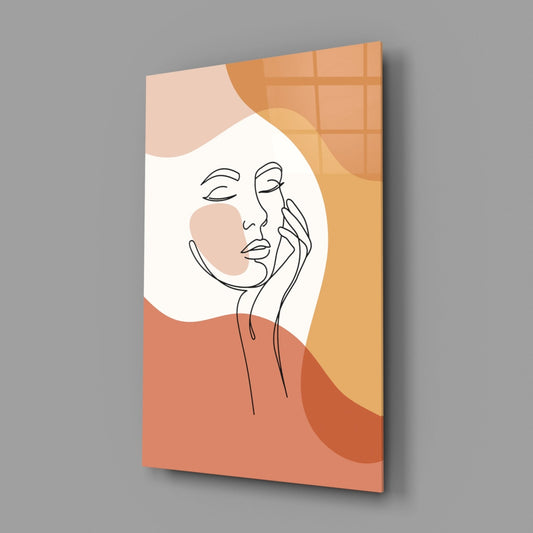
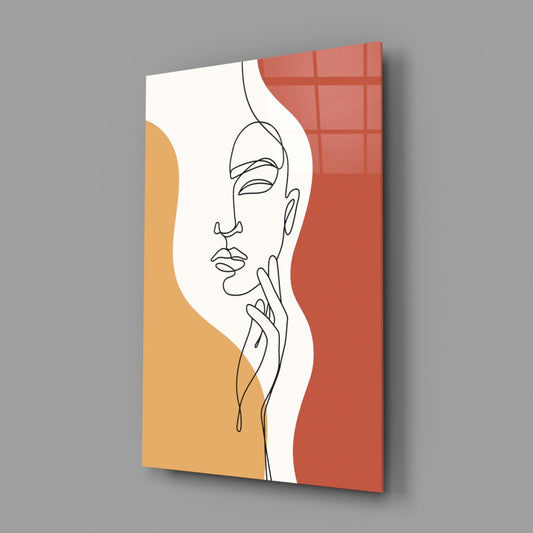
Woman Line Art Hand on Cheek Terracotta Glass Wall Art
Partner studio
Regular price From $159.90 USDRegular price -
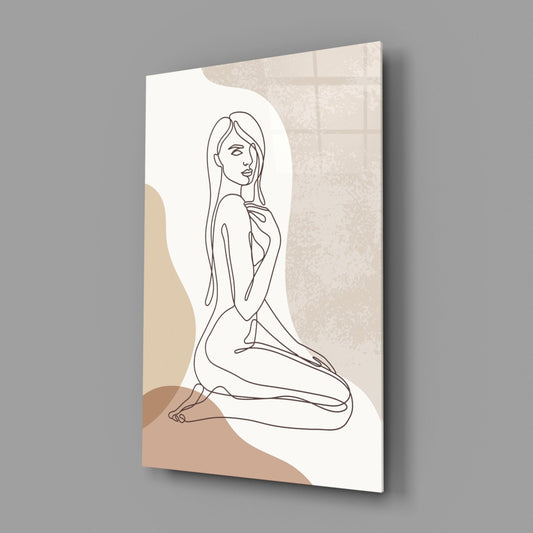
Kneeling Woman Nude Line Art Neutral Glass Wall Art
Partner studio
Regular price From $159.90 USDRegular price -
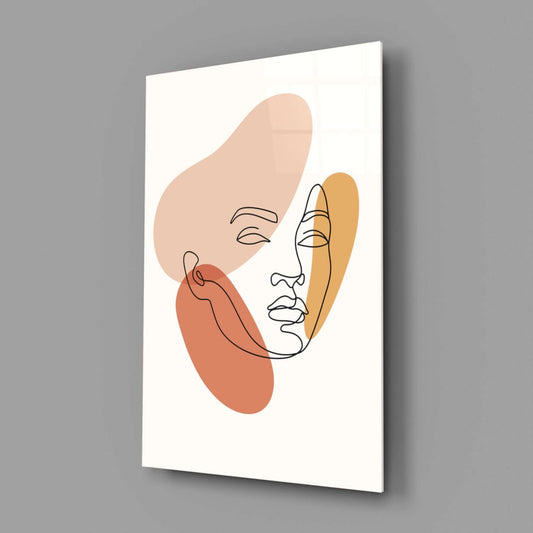
Line Art Woman Face With Earth Tone Shapes Glass Wall Art
Partner studio
Regular price From $159.90 USDRegular price -
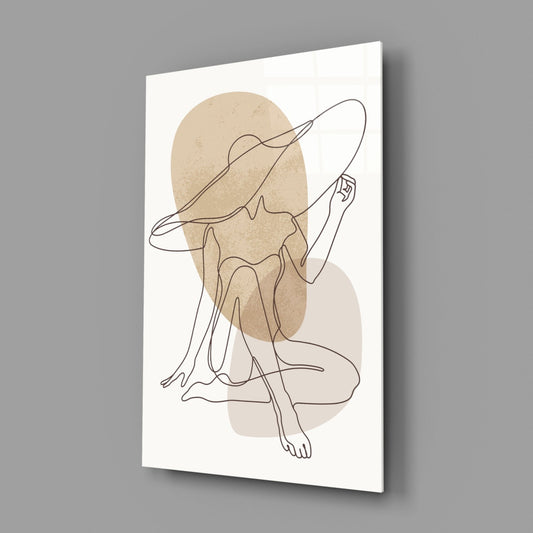
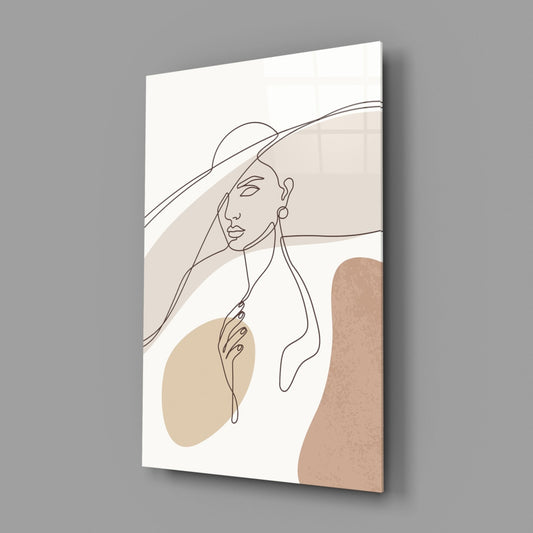
Seated Woman in Wide Hat Line Art Glass Wall Art
Partner studio
Regular price From $159.90 USDRegular price -
Serene Woman Face Line Art Rust and Gold Glass Wall Art
Partner studio
Regular price From $159.90 USDRegular price -
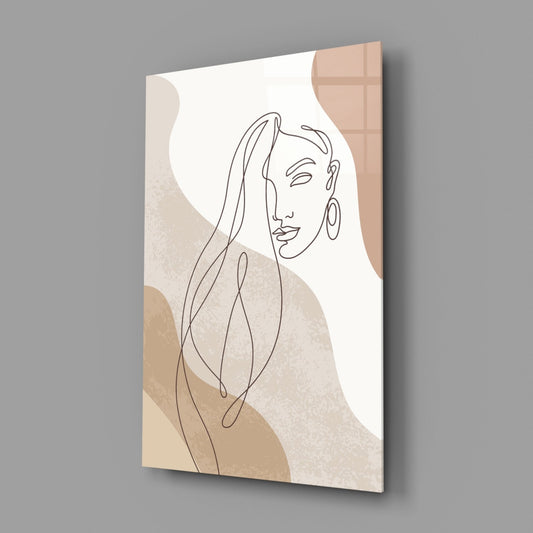
Line Art Woman With Flowing Hair Glass Wall Art
Partner studio
Regular price From $159.90 USDRegular price -
Woman in Sun Hat Line Art Glass Wall Art
Partner studio
Regular price From $159.90 USDRegular price -
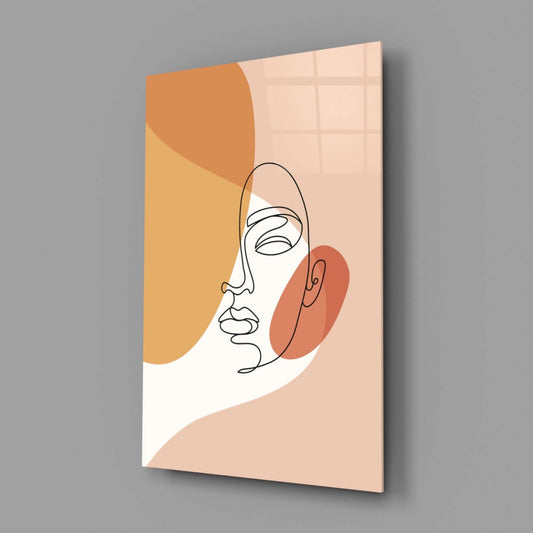
Peach Abstract Line Art Face Glass Wall Art
Partner studio
Regular price From $159.90 USDRegular price -
Elegant Woman in Wide Hat Line Art Glass Wall Art
Partner studio
Regular price From $159.90 USDRegular price










- Free shipping available
- 30-Day Money-Back Guarantee
- Lifetime Quality Guarantee
- Made to order in the USA
- Certificate of Authenticity included
Free shipping, both guarantees, made to order and the Certificate of Authenticity apply to pieces designed by Sparkycare. Partner-studio pieces say so on their own page and follow their studio's shipping and returns.
Minimalist line art works because of what it leaves out. Strip a subject down to its outline and two things happen at once: the piece stops competing with the room, and it starts reading from across it. That is a rare combination, and it is why line work ends up on walls that reject almost everything else.
Why Minimalist Line Art Suits a Wall Nobody Wants to Fight
Most rooms already have enough going on. A patterned rug, a busy bookshelf, a sofa somebody else chose. Line art sits in that without arguing, because it is mostly negative space, and negative space is the one thing a crowded room is short of.
It also holds up at distance. Fine detail disappears past a few feet; a single confident contour does not. Hang a piece of black and white line art at the end of a hallway and it still reads. Hang a densely rendered illustration in the same spot and it turns into a gray rectangle.
Where Contour Work Earns Its Wall
Line work does its best job in a room with a job of its own. A training space, a study, a desk wall you look past for eight hours. Those rooms are usually short on wall and long on clutter, and a drawing built from one line and a lot of empty space is the only kind of art that adds a subject without adding noise.
As a style, line work is broader than any one subject: typographic pieces, figures reduced to contour, botanical outlines and abstract single-line compositions all sit inside it, and what unites them is restraint rather than what they depict. If you want the calmest version of it, look for continuous line art in two values, a black or charcoal line on off-white, with nothing else in the composition. For a softer take, some pieces pair the line with a single block of earthy color.
Choosing a Size and a Frame
Line work rewards going one size larger than instinct suggests. The composition is mostly empty, so a small piece reads as a small piece rather than as art. On a desk wall or a narrow stretch beside a door, something around 11x14" or 16x20" works well. Above a sofa or a bed, use roughly two thirds of the furniture width, for example 18x24" or 24x36". A home gym wall takes 24x36" comfortably. Each product page lists its sizes.
This collection holds framed prints, gallery-wrapped canvas and glass. On a framed print, frame color does more work here than usual. Black frames sharpen high-contrast black-and-white line work and are the default for graphic pieces. White frames disappear into a white wall and let the drawing float, which suits softer, sparser compositions. Natural wood warms a piece enough to move it out of an office and into a living room. Dark wood is the choice when the room already leans warm. A gallery-wrapped canvas skips the frame altogether, with the image carried around the edges, so it sits closer to the wall and reads as one clean block. Glass has a smooth glossy front that keeps a dark line crisp and comes with an adjustable steel mount (screws and wall plugs not included).
Line pieces also hang well in pairs and threes, because the shared visual language does the work that a matching frame usually has to do. If you are planning a set, pick one size and one finish and repeat it exactly.
Our Own Designs
Our own line art is drawn in-house. Our framed prints use a solid pine frame with a shatterproof plexiglass front in White, Natural Wood, Dark Wood or Black, printed with fade-resistant, archival-quality inks. Each of our own designs comes with a Certificate of Authenticity, is backed by our 30-Day Money-Back Guarantee and our Lifetime Quality Guarantee, and ships with free shipping available. Pieces from our partner studios say so on their product page, with their own shipping and return window.
Line Art Questions
What counts as line art?
Work built from contour rather than from fill: a subject described by its outline, with little or no shading, and a lot of deliberate empty space. The style covers figures, botanicals, lettering and abstract contour work, and what unites them is restraint rather than subject matter.
Does line art work in a busy room?
Better than most things, because it adds a subject without adding visual noise. In a room with a patterned rug or a full bookshelf, a line piece gives the eye somewhere to rest rather than one more thing to process.
What size should I choose?
Larger than feels obvious. Around 11x14" or 16x20" for a desk wall or a narrow space; 18x24" or 24x36" above a sofa, a bed or in a home gym. A small line piece on a large wall reads as an afterthought, because most of the artwork is space. Each product page lists the sizes that piece comes in.
Which frame color?
For a framed print: black for high-contrast graphic work, white to let a sparse drawing float against a pale wall, natural wood to warm it for a living room. When in doubt on a room you have not seen, black or natural wood. If you would rather skip the frame, choose a gallery-wrapped canvas or a glass piece.
Do line pieces work as a set?
Yes, and it is the easiest kind of gallery wall to get right. Keep the size and the finish identical across the set and let the drawings carry the variety. Uniform framing is what makes a group read as deliberate rather than accumulated.
Keep Exploring
The nearest neighbours are minimalist wall art and the monochrome work in black and white wall art. If the frame matters as much as the drawing, see framed wall art. And for how to size, hang and group line pieces in a real room, read our guide to styling line art prints at home.