
Safari Animal Wall Art Ideas for a Bold, Adventurous Room
Francisco Barbero
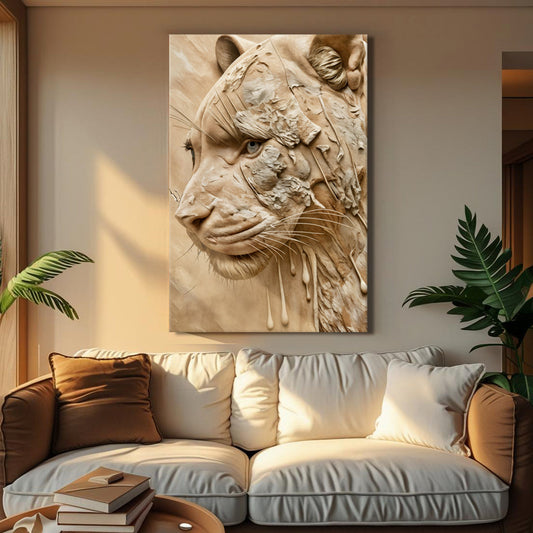
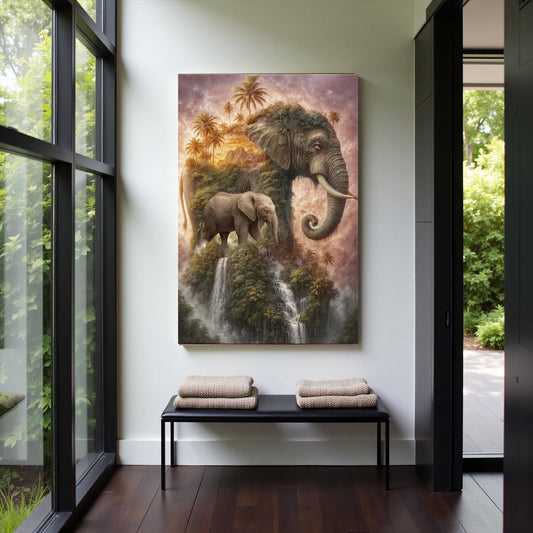
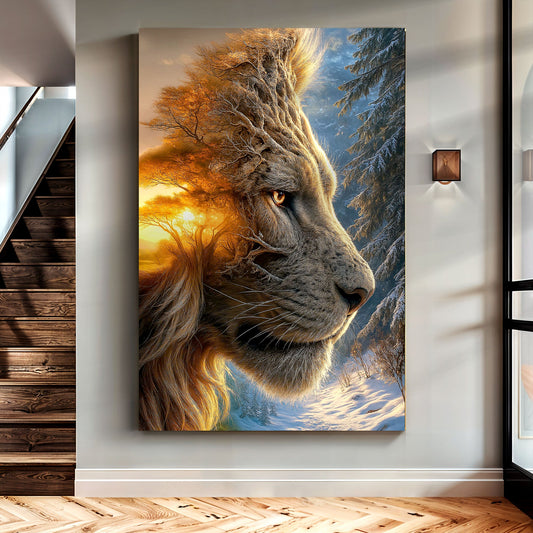
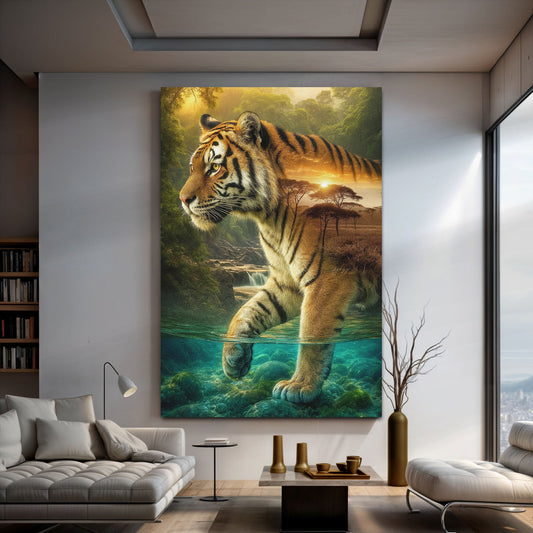
Lions with a steady gaze. An elephant that makes a corner feel calm and grounded. A giraffe peering down with what can only be described as personality. There is a reason safari animals have stayed near the top of nursery themes for decades, and a reason the same animals look just as right above a grown-up sofa. Safari animal wall art carries warmth, a little adventure, and a sense of the wild without a single roar. This is a room-by-room tour of what actually works, across 3 art styles and a full size range, from a small gift piece to a 28x40 statement wall.
Quick honesty note before we start, because the search term that brings a lot of people here is "safari print wallpaper." We make framed prints, not wallpaper or murals. That is genuinely good news if you rent, or if you change your mind. A framed lion comes off the wall in 5 minutes and moves to the next house. Wallpaper is a weekend, a steamer, and a commitment. Prints give you the same safari feeling with none of the regret.
Why safari animal wall art works in almost any room
Part of the appeal is practical. Safari animals are gender neutral, so you are not locked into pink or blue, and they pair naturally with the earthy greens, tans, and warm neutrals that have dominated nurseries for years. Kids also stay attached to them far longer than they stay attached to a cartoon character. A lion you hang at 6 months still works at age 6.
The other part is emotional. These are real animals with real lives, and that quiet truth gives the art weight. African savanna elephants are the largest land animals on earth, and the World Wildlife Fund explains that they live in complex matriarch-led herds where the whole group helps raise each calf. A single calf arrives only once every 4 to 5 years, after a 22-month pregnancy, the longest of any mammal. Hang an elephant and her baby over a crib and that backstory is doing quiet work, whether or not anyone says it out loud.
That is also why safari pieces refuse to stay in the nursery. A bold elephant in a solid pine frame looks completely at home above a living room sofa. A framed zebra brings real contrast to a home office. The animals carry the same meaning at any age, which makes this some of the most flexible animal art for home you can buy.

Three safari art styles, and the rooms they suit
Most safari pieces fall into one of 3 looks. Knowing which one you are drawn to makes every other choice easier, from frame color to how many prints you hang.
Watercolor: soft, sweet, made for nurseries
Loose washes of color, gentle edges, a baby giraffe that looks like it might be smiling. Watercolor is the heart of most safari nursery decor because it reads as tender rather than loud. The palettes lean into sage, blush, dusty blue, and warm sand, which is exactly why they slot into earthy nursery schemes so easily. Watercolor suits nurseries, gentle kids rooms, and quiet reading nooks. A set of 3 smaller pieces, 8x10 or 11x14, spaced along one wall gives you a coordinated look without much effort.
Vintage illustration: timeless and a little grown-up
Think detailed, old-encyclopedia style studies of a lion or a rhino, with fine linework and muted, slightly faded color. Vintage-style illustration has one foot in the nursery and one foot in the study, which makes it the most versatile of the 3. It grows with a child beautifully, and it looks deliberate in a home office, a hallway, or a den. Hung as a grid of 4 or 6 matching frames, it has genuine presence on a wall.
Modern minimalist: clean lines for the rest of the house
A single-line giraffe, a zebra reduced to bold black-and-white shapes, an elephant in a few confident strokes. Minimalist safari art carries almost no visual weight, which makes it the easiest to live with in adult rooms. It plays well in living rooms, bedrooms, and small apartments, and it holds its own next to busy textiles or a strong paint color. One oversized 24x36 line-art animal can anchor a whole blank wall on its own.
If you want to see these 3 looks side by side instead of guessing from a phone screen, browsing a single safari and jungle animal wall art collection is the fastest way to find the palette that actually fits your room.
Room by room: where safari animals earn their keep
The same lion can sing in one room and disappear in another. Here is where safari pieces tend to pay off.
- Nursery. Soft watercolor animals in a coordinated set. Try a single 16x20 centered over the crib, or three 8x10 prints spaced 2 to 3 inches apart. For safety, keep every frame at least 12 inches above the crib rail. For the rest of the room, our nursery wall art collection rounds out the theme with alphabet prints, gentle florals, and more.
- Kids room. This is where you can get a little bolder. A playful gallery wall mixing 5x7, 8x10, and 11x14 prints in matching frames feels collected and fun, and it gives a growing kid plenty to look at.
- Living room. Size up and let one animal lead. A single 24x36 elephant or lion above the sofa, or a balanced pair, becomes a real focal point that guests actually stop and notice.
- Home office. A high-contrast framed zebra or a calm vintage lion behind your monitor adds character without competing with your screen. Keep it to 1 or 2 pieces.
- Bedroom. Lean quiet. A muted vintage pair or a single soft minimalist animal over the headboard keeps the room restful while still nodding to the theme.
- Hallway. Long, narrow, usually ignored. A vertical run of 3 to 5 matching safari prints turns dead space into something worth slowing down for.
How to group safari prints into a gallery wall
A safari gallery wall lives or dies on a few measurements, and getting them right is mostly about restraint. Start with one anchor piece, then build around it.

The standard designers reach for is the 57-inch rule. Apartment Therapy notes that the center of your arrangement should sit around 57 inches from the floor, the same average eye height used in many galleries and museums. Treat the whole grouping as one big picture: arrange it on the floor first with paper cutouts, hang your center piece at 57 inches on center, then fill in around it.
Spacing is the other half. The same source recommends 3 to 6 inches between frames in a gallery wall, close enough that the prints read as a family, far enough that each animal gets room to breathe. Keep the bottom edge of art 6 to 8 inches above a sofa or dresser. In a nursery, ignore the eye-level math and prioritize safety: hold everything at least 12 inches above the crib rail. A few grouping formulas that tend to work:
- The trio. Three 8x10 or 11x14 animals in a row, evenly spaced. The simplest win for a nursery.
- The grid. Four or six matching frames in a clean rectangle. Vintage illustrations love this layout.
- The anchor. One large 24x36 animal flanked by smaller prints. Best above a sofa or changing table.
- The vertical run. Three to five prints stacked down a narrow hallway or beside a door.
Choosing safari prints that last past the toddler years
Inspiration is the easy half. The piece also has to survive a decade on a wall, and around small hands, which is where a few specifics matter.
Paper first. Thin poster stock curls, dents, and yellows. Sparkycare prints are finished with fade-resistant, archival-quality inks, in matte or semi-gloss, so color lies flat and holds instead of drifting. Standard poster paper near a sunny nursery window can fade noticeably in a year or two. Fade-resistant inks are built to resist that.
Then the frame. On Sparkycare framed pieces the frame is solid pine, not hollow MDF, in White, Natural Wood, Dark Wood, or Black, so it has real weight and squared corners. For safari nurseries, natural Wood and White tend to pair best with earthy greens and warm tans. The front is shatterproof plexiglass rather than glass, which is the detail that actually matters in a baby's room: it survives a bump off the wall without becoming a hazard. Every framed print arrives ready to hang the day it lands, hardware on, so a safari wall goes up in 5 minutes instead of requiring a trip to the framer.
One quieter detail. Elephants, lions, and giraffes are not just decor motifs, they are species under real pressure. The WWF reports that African elephant numbers have fallen from an estimated 12 million a century ago to around 400,000 today, and that elephants act as keystone species that shape whole ecosystems. Knowing the animal on the wall is a living thing, not a logo, is part of why this art keeps its meaning. When you are ready to find your pieces, the full safari animal wall art collection ships with free shipping available, a digital Certificate of Authenticity, and a 30-Day Money-Back Guarantee if a print does not feel right at home.
Frequently asked questions
What size safari prints work best above a crib?
A single 16x20 centered above the crib is the most popular choice, and a set of three 8x10 prints spaced 2 to 3 inches apart also looks balanced. For safety, keep every frame at least 12 inches above the crib rail so nothing hangs within a baby's reach.
Is safari animal wall art only for nurseries?
Not at all. Safari prints work in living rooms, kids rooms, home offices, bedrooms, and hallways. The trick is sizing up for adult spaces: a framed 24x36 elephant or a framed lion above a sofa reads as bold, intentional decor, while soft watercolor animals lean nursery.
Can I get a safari look without wallpaper?
Yes, and framed prints are the easier route. Wallpaper and murals are permanent and hard to remove, while a framed safari print comes off the wall in minutes and moves with you. You get the same animals and palette with no commitment, which makes prints ideal for renters.
What colors go with safari nursery decor?
Earthy, natural tones work best: sage and olive greens, warm tans, soft cream, and dusty blue or blush as accents. These pair naturally with watercolor safari animals and with natural Wood or White frames. Add a green plant and a woven basket to complete the theme.
How do I arrange safari prints as a gallery wall?
Start with one anchor piece and lay the group out on the floor first. Hang the center at about 57 inches from the floor, leave 3 to 6 inches between frames, and keep the bottom edge 6 to 8 inches above furniture. In a nursery, prioritize keeping all frames at least 12 inches above the crib rail.