
What to Put on Bare Nursery Walls (That'll Grow With Your Kid)
Francisco Barbero
The best nursery wall art ideas pair a calm, gender-neutral image with a frame hung securely and well clear of the crib. Animals, sky scenes, and botanical prints all work, and a set of three at eye level beats one tiny piece. Choose art a few years older than the baby.
Staring at a blank nursery wall is its own small panic. You want it to feel finished and sweet without buying a wall of cartoon characters you will be sick of by the first birthday. The trick most lists miss is to decorate for the kid this room becomes, not just the newborn arriving. Below are nursery wall decor ideas that stay charming for years, plus the practical parts that actually matter near a crib: what to hang, where to hang it, what size to buy, and how to keep it safe.
1. What Should You Put on Nursery Walls?
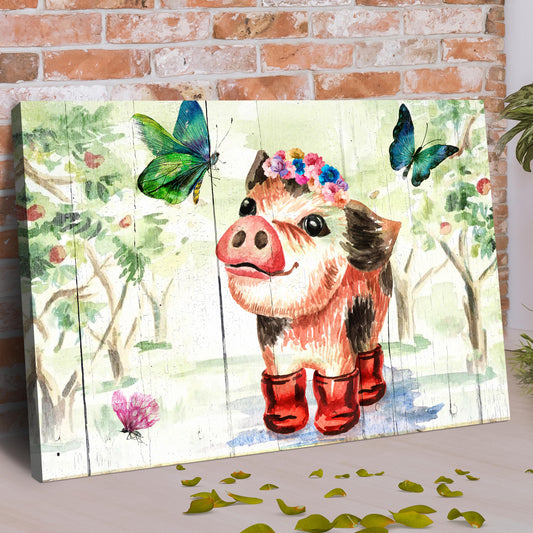
Put art on nursery walls that you would still like in a few years, leaning on themes that age well rather than baby-specific cartoons. Three categories rarely disappoint. Animals are the easy default, and safari or woodland creatures drawn with a little restraint read as sweet at six months and still cool at six years. Sky and celestial scenes, think moons, stars, and soft clouds, bring a quiet, dreamy feel that suits any gender. Botanical prints, simple leaves or pressed-flower studies, tie the room to the rest of your home and never look like a theme you outgrow. A name or a short word in letters can anchor one wall, though it dates faster than the art around it, so keep it to a single piece. The honest filter: if the image would look at home in a grown-up room too, it has staying power here.
2. What Are Good Gender-Neutral Nursery Wall Decor Ideas?
Good gender-neutral nursery decor leans on a calm color base with one or two accent shades, then lets the subject do the talking. Skip the pink-or-blue question entirely by building on warm neutrals, sage and olive greens, soft terracotta, oatmeal, or a grounded navy, then layering art in those same tones. Animals are the reliable unifier here because woodland and safari creatures appeal across the board without reading as "for a boy" or "for a girl," a point design editors make often when planning rooms that work for any baby. Sky scenes and botanicals do the same quiet job. If you want pattern, repeat one shade between the art, the rug, and the crib sheet so the room feels pulled together instead of busy. A set of three coordinated prints in one palette is the fastest way to make a neutral wall look intentional rather than unfinished, and it gives you room to swap a single frame later without redoing everything.

3. How Do You Choose Nursery Art That Grows With Your Child?
Choose nursery art that grows up by aiming a few years older than the baby and avoiding anything tied to a single phase. The fastest way to date a room is wall-to-wall pastel cartoons; a toddler stops caring about them, and then you are buying art twice. Instead, pick images with a longer shelf life: a realistic-but-friendly fox or elephant, a mountain range, a star map, a single bold botanical. These read as sweet for a newborn and still hold up for a kid who has opinions. Style matters as much as subject, so favor clean illustration or simple photography over busy, branded characters. Color helps too, since muted, grounded tones move easily from nursery to big-kid room while neon themes do not. A practical move is to treat the art as the permanent layer and let the cheap, swappable stuff, the garland, the throw pillow, the removable decal, carry the babyish charm you will happily retire.
4. Where Should You Hang Art in a Nursery?
Hang nursery art at adult eye level on the walls people actually face, and treat the crib wall with extra care. The standard guideline is the 57-inch rule, which puts the center of a piece about 57 inches from the floor. Above a changing table or dresser, drop it so the bottom of the frame sits roughly 8 to 12 inches above the furniture, which keeps the art visually connected to the piece below. Over a glider or reading chair, center the art around 57 inches so it frames the seat. The crib is the spot to slow down: keep the wall directly above it clear and hang the art on an adjacent wall instead, so nothing can come down into the sleep space. Apartment Therapy notes that babies spend a lot of time looking up, so the ceiling and the upper wall are worth a little thought, not just the area at standing height.
5. How Big Should Nursery Wall Art Be?
Size nursery art to the furniture it hangs over, aiming for art that spans roughly 60 to 75 percent of the width below it. Because the wall above the crib stays clear, the spots to size for are the changing dresser, the glider, and the open wall beside the crib. Measure the top of the dresser and take 60 to 75 percent of it: on a 36-inch dresser that works out to about 22 to 27 inches of art, so a single 18x24 or a pair of 16x20s holds the space without crowding it. On a wider open wall, a trio of 11x14 prints, or three 16x20s, spreads the same rule across a group and looks better than a single small frame floating in space. For a narrow gap beside a window or door, one 11x14 is plenty. A statement wall behind a glider can take a 24x36. When in doubt, go slightly larger than feels safe, since the most common nursery mistake is art that ends up too small and looks lost.

6. Is It Safe to Hang Art Over a Crib?
The safe answer is not to. Keep the wall directly above the crib clear and hang the art on an adjacent wall instead. The American Academy of Pediatrics is clear that a crib should hold a fitted sheet and the baby and nothing else, and that loose or soft items in the sleep area raise the risk of suffocation, so the AAP recommends keeping the crib clear. A frame or a shelf that comes off the wall lands in that same space, which is the whole reason to leave the crib zone empty. On the walls you do use, fix every piece with wall anchors rated for the weight, not a single thumbtack, and hang it out of reach once your baby can pull to stand. And skip glass anywhere near a sleep space; every Sparkycare piece comes behind a shatterproof plexiglass front rather than glass, which is the safer choice in a room where a child sleeps.
7. What Are the Best Nursery Themes for the Walls?
The best nursery wall themes are the ones with range: animals, sky, and botanical lead because they flex from newborn to big kid. Safari and woodland animals are perennial favorites because a friendly lion or fox works for any baby and still feels fun years later; our safari animal art prints lean into that gentle, storybook look on purpose. Sky and celestial themes, moons, stars, and soft clouds, create a calm, dreamy room and pair well with almost any color. Botanical and nature prints connect the nursery to the rest of your home and are the least likely to feel dated. You can also mix two themes lightly, say a botanical beside an animal, as long as you hold one shade or one frame color steady so the wall reads as a set. One modest, well-supported note for the early weeks: pediatric sources point out that newborns see mostly in high contrast and shades of gray before color vision develops, so a simple black-and-white piece at close range can be genuinely interesting to a very young baby. Treat that as a nice bonus, not a rule for the whole room.
Frequently Asked Questions
What kind of wall art is best for a nursery?
Animal, sky, and botanical art tend to be best for a nursery because they suit any baby and still look good as the child grows. Friendly safari or woodland animals, soft moon-and-stars scenes, and simple leaf or flower prints all age well. Pick art you would happily keep for a few years rather than baby-specific cartoons.
How high should you hang art above a crib?
Better not to hang it above the crib at all. Keep the wall over the sleep space clear and move the art to an adjacent wall, where the usual guide applies: the center of the piece around 57 inches from the floor, or a little lower if you want it near your baby's eye line. Use weight-rated wall anchors and avoid glass in a room where a child sleeps.
What size art should I get for a nursery wall?
Aim for art that spans roughly 60 to 75 percent of the furniture or wall below it, and size for a wall other than the one above the crib, which is best left clear. On a 36-inch changing dresser that is about 22 to 27 inches of art, so a single 18x24 or a pair of 16x20s works well. On a wider wall, a set of three 11x14 prints or three 16x20s fills the space better than a single small frame.
Is it safe to put pictures over a baby's crib?
The safer choice is to keep the space directly over the crib empty and hang pictures on an adjacent wall. The AAP advises keeping the crib itself clear except for a fitted sheet and the baby, and a frame or shelf that falls ends up in that same space. If art is going anywhere near where a child sleeps, a shatterproof plexiglass front rather than glass is the safer pick.
Once you have the theme, the wall, and the right size, the rest is just choosing pieces you genuinely love looking at. Browse our nursery wall art collection for framed prints in sizes from 5x7" to 28x40" plus ISO A3/A2/A1 and four frame colors, with a shatterproof plexiglass front and a 30-Day Money-Back Guarantee if it does not work on your wall. Each piece is finished with fade-resistant, archival-quality inks in solid pine frames, and every order includes a Certificate of Authenticity. Still deciding on dimensions before you commit? Our guide to how high to hang wall art walks through heights and spacing for any wall in the house.