
Inspiring Kids Room Wall Decor Ideas (That Grow With Them)
Francisco Barbero
The hard part of decorating a child's room is not finding cute art. It is finding art that still looks right when the cute toddler is an opinionated seven-year-old. Most nursery decor has a shelf life of about 18 months. Then the pastel bunnies start to feel like a baby's room, and you are back to square one. The kids room wall decor ideas worth your money are the ones that age slowly: pieces a 2-year-old smiles at and an 8-year-old does not roll their eyes at.
This guide covers exactly that: themes that stay relevant for years, how to hang a gallery wall at a kid's actual height, the safety details that matter above a bed, what to look for so the art survives sticky hands, and the personalized pieces that double as keepsakes. Decorate once, skip the redo.
Kids room wall decor ideas by theme (and 5 that don't last)

The trick is to pick subjects a child grows into rather than out of. A few do this almost automatically.
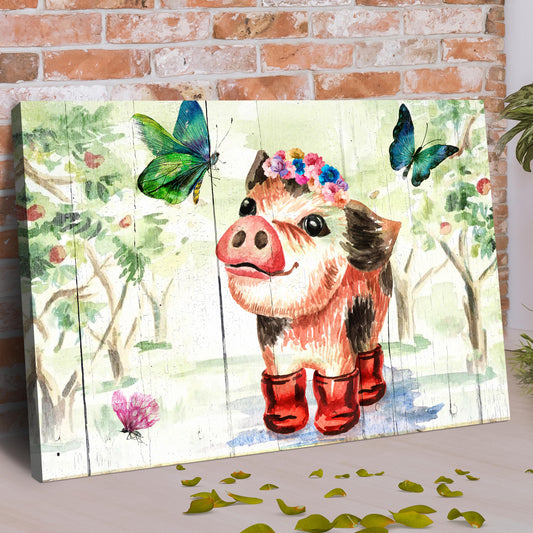
Animals, done with restraint. Cartoon characters date fast. A calm illustrated fox, a line-drawing elephant, or a watercolor whale reads as charming at age 3 and still works at age 10. Choose elegant animal illustrations over baby motifs and you buy yourself years.
Nature and botanicals. Trees, leaves, mountains, the ocean. These are the quiet workhorses of a child's room because they carry zero age signal. A botanical print is just as at home over a crib as it is over a 9-year-old's reading nook.
Maps and the night sky. A world map or a constellation chart earns its place twice: it looks good and it teaches something. Educational themes like maps, solar systems, and animal species stay relevant across a huge age range, which is a big part of why parents keep coming back to them.
Gentle abstract. Soft arches, rounded shapes, muted color blocks. Abstract-leaning art and slightly more grown-up styles tend to survive the toddler-to-tween transition better than anything literal.
Alphabet and numbers, the modern kind. Skip the primary-color schoolroom poster. A minimal alphabet print in 2 or 3 muted tones is educational without screaming "baby."
What to retire early: licensed cartoon characters, anything tied to a single TV show, neon primary-brights, glittery princess or superhero scenes, and oversized name banners in babyish fonts. A child's love of a specific show can end in a month, and you do not want a 24x36 reminder of it on the wall.
If you are decorating from scratch for a baby and want pieces that will carry forward, the gender-neutral, nature-leaning options in the nursery wall art collection are built to transition out of the nursery instead of getting boxed up at age 2.
Build a gallery wall at kid height
Most people hang art for adults, then wonder why a child never looks at it. The fix is height. Designers and galleries hang single pieces so the center sits about 57 inches from the floor, which lands at average adult eye level. For a child's room you have two good options. Keep one focal piece at the standard 57 to 60 inches so the wall reads as intentional, and bring a second cluster down to roughly 40 to 45 inches, closer to a young child's sightline. Apartment Therapy's editor explains the 57-inch rule and how to apply it to a group by treating the whole arrangement as one big picture and centering that.
A gallery wall is also the best way to future-proof a kid's room. Build it so individual frames swap out. When your child outgrows the rocket print, you pull one 8x10 and slide in something new without touching the rest of the wall.
A simple, swap-friendly layout that works:
- 1 anchor piece at 16x20 or 18x24, hung first and centered.
- 4 to 6 smaller frames around it at 5x7, 8x10, and 11x14.
- 2 to 3 inches of consistent spacing between every frame.
- Mix 2 frame colors max. White and natural wood is a clean, calm pairing.
- Lay the whole thing out on the floor first, or cut paper templates and tape them up, before a single nail goes in.
Reserve one or two frames for your child's own drawings. Swapping in their latest masterpiece every few months keeps the wall personal and gives them a reason to care about it. It costs nothing and it is the part kids love most.
Safety first: what to hang above a bed

This is the part the pretty inspiration photos skip. Anything over the spot where a child sleeps needs more thought than a piece in the hallway.
The safest move is the simplest: do not hang heavy art directly above the pillow. Place it beside the bed, or use a wider, lower arrangement so nothing sits right over the head. If you do hang above a bed, keep the pieces lightweight and small, and skip glass entirely.
Glass is the real hazard. A glass frame knocked by a flying toy can shatter, and broken framing glass is one of the most common injuries in a fall or a shake. This is why a shatterproof front matters in a kid's room more than anywhere else in the house. Sparkycare framed pieces ship with a shatterproof plexiglass front instead of glass, so a stray ball or a wobbly climb does not turn into a cleanup of sharp shards.
How you fasten it counts too. The Earthquake Country Alliance, a public-safety group backed by FEMA and USC, gives clear guidance for securing framed pictures so they cannot fall on someone. For anything under 20 pounds, hang it on a hook or nail and add earthquake putty or a small Velcro tab at all 4 corners so the bottom cannot lift or swing. For heavier pieces, find a stud and use a closed-loop hanger that stops the wire jumping off the hook. A 30-second putty step is cheap insurance in a room where a child climbs on the bed.
Two more quick rules: hang anything within a young child's reach on a stud, not just drywall, and give the bed a couple inches of gap from the wall so if anything ever does come loose, it falls behind the bed rather than onto it.
Will it survive a kid's room? Durability and cleanability
Children are hard on rooms. The art has to keep up. There are two halves to this: the print and the surface around it.
For the art itself, paper weight is the tell. A flimsy 80 to 120gsm poster curls, dents, and yellows. A heavier 200gsm paper with fade-resistant, archival-quality inks holds flat and keeps its color for years, so the shades a 2-year-old sees are still true when they are 10.
A real wood frame matters more than people think. Solid pine takes a knock and stays square. Hollow MDF chips at the corners and warps, and in a child's room that happens fast. Pair a sturdy frame with a shatterproof front and the piece is ready to hang the day it arrives, no separate glass to source, no fragile corners to baby.
For the wall behind the art, take it from the people who do this for a living. Interior designers told Homes & Gardens that a child's room needs a higher-sheen, washable paint finish, eggshell or above, because matte shows every scuff and resists wiping clean. The same piece also makes the timeless-color case: choose a sage or olive over a bright Kelly green, and the room ages with your child instead of fighting them. Low-VOC paint is the other non-negotiable in a room where a small person sleeps 10-plus hours a night.
You will find solid pine frames with a shatterproof front across the framed wall art collection, in white, natural wood, dark wood, and black, in sizes from small accents up to 28x40, so the same look scales from a tiny corner to a statement wall.
Palettes that coordinate with changing tastes
The fastest way to date a kid's room is to commit hard to one bold color. The fix is a calm, neutral base with color that lives in the art, not the walls.
Start with a quiet wall: warm white, soft greige, a muted sage, or a gentle dusty blue. Designers reach for these in kids' rooms because they soothe and they do not read as a baby's room or a teenager's. Then let 2 or 3 accent colors come from the prints and the textiles, the pieces you can swap cheaply.
When tastes shift, and they will, you change a throw pillow, a rug, and one or two 8x10 prints. The painted base stays. A full redecorate becomes a 20-minute refresh. Spend on the durable, swap the cheap.
A loose palette formula that ages well: one calm wall color, one warm neutral (oatmeal, sand), one nature tone (sage, terracotta, ocean blue), and one soft accent (blush, mustard, dusty teal). Keep brights to small doses and the room reads grown-up enough to last 5 or 6 years.
Personalized pieces and unique kids room art gift ideas
If you want something a child keeps into adulthood, make it personal. A custom piece carries weight that a poster never will, and these double as some of the most unique kids room art gift ideas for a baby shower, a first birthday, or a christening.
A few that tend to become keepsakes:
- A name print in a grown-up font. Skip the bubble letters. A clean, modern type treatment of a child's name works from the nursery through the tween years.
- A custom piece made from your photo. A favorite snapshot turned into framed art, a family scene, a pet, a meaningful place, rendered as a piece you can hang rather than just print out.
- A birth-detail print. Name, date, weight, and time, set in a simple layout. Personal, but understated enough to stay on the wall for years.
- A growth-chart print or a 'where you were born' map. Useful and sentimental at once, and genuinely fun for an older kid to look at.
The keepsake value is the point. A custom piece made from your photo is the gift a parent actually hangs and a grown child later asks to keep. Personalized pieces like this live in the custom art collection, and because every Sparkycare order comes with a 30-Day Money-Back Guarantee and free shipping available, gifting it across the country (or to yourself) is low-risk.
Frequently asked questions
What kind of wall art is best for a kids room?
Pick subjects that grow with the child: gentle animal illustrations, nature and botanicals, world maps, constellations, soft abstract shapes, and modern alphabet prints. These stay relevant from toddler through the tween years. Avoid licensed cartoon characters and neon primary-brights, which tend to date within a year or two.
How high should I hang wall art in a child's room?
Hang a focal piece with its center about 57 to 60 inches from the floor, the gallery standard. For art meant for the child to look at, bring a cluster down to roughly 40 to 45 inches, closer to their eye level. For a gallery wall, treat the whole group as one piece and center that at around 57 inches.
Is it safe to hang framed art above a child's bed?
It is safer not to hang heavy art directly over the pillow. If you do hang above a bed, use lightweight, smaller pieces with a shatterproof plexiglass front instead of glass, and secure them well. For frames under 20 pounds, add earthquake putty or Velcro at all four corners, and anchor heavier pieces to a wall stud with a closed-loop hook.
What is a good personalized art gift for a kid's room?
A custom piece made from your photo, a clean name print, a birth-detail print, or a 'where you were born' map all make lasting keepsakes. The most giftable versions are built from a photo or detail that is unmistakably theirs, which is what makes a keepsake worth keeping.
Will inexpensive prints hold up in a kid's room?
Thin posters around 80 to 120gsm curl, dent, and fade fast. Look for heavier 200gsm paper with fade-resistant, archival-quality inks and a solid wood frame with a shatterproof front, which together stand up to knocks and keep their color for years. Pairing durable art with a washable, eggshell-finish wall paint makes the whole room easier to keep clean.