
What Is Boho Style? (And How to Get It Without Looking Messy)
Francisco Barbero
Boho style, short for bohemian, is a relaxed, collected look built on natural materials, layered textiles, plants, and a warm earthy palette, with a free mix of patterns and vintage or global pieces. The aim is a space that feels lived-in and personal rather than matched. Done well, boho reads as warm and curated, not cluttered.
That last part trips most people up. The line between cozy and chaotic is real, and it comes down to a few habits rather than a long list of rules. Below is what the style actually is, the pieces that make it work, how to use boho wall art so it pulls a room together, and how to keep the whole thing feeling calm.
What Is Boho Style, Exactly?
Boho is an eclectic, casual look that pulls from different cultures, eras, and creative influences instead of one tidy theme. It leans on layered textures, a warm color base, and plenty of natural touches, and it values personal expression over strict coordination. The roots go back nearly 200 years to 1830s Paris, where the word "bohemian" described artists and writers living an unconventional, nomadic life, a thread traced by Encyclopaedia Britannica through to the 1960s and the look we borrow from today. There are 2 broad versions. Classic boho is bold and colorful with lots of pattern. Modern boho keeps the same warmth but pulls the palette back to neutrals and earth tones, which is the version most people picture now. Both share one idea: the room should feel collected over time, not bought in a single afternoon.
The Key Elements of Bohemian Decor
Boho is less a checklist than a feeling, but 6 elements show up in almost every version of it. Natural materials come first: rattan, jute, wood, cane, and bamboo give the room its earthy backbone. Layered textiles add the softness, things like woven throws, a macrame hanging, floor cushions, and rugs stacked one over another. Plants bring life, and they earn their place; the Royal Horticultural Society notes that indoor greenery is linked to better mood and lower stress, not just a prettier shelf. A warm, earthy palette ties it together, terracotta, mustard, olive, and cream, often with a few jewel-tone pops. On top of that sits a relaxed mix of patterns and a handful of vintage or globally sourced pieces that give the space its story. You do not need all six at full volume. Two or three, layered with intention, already read as boho.

How to Use Boho Wall Art
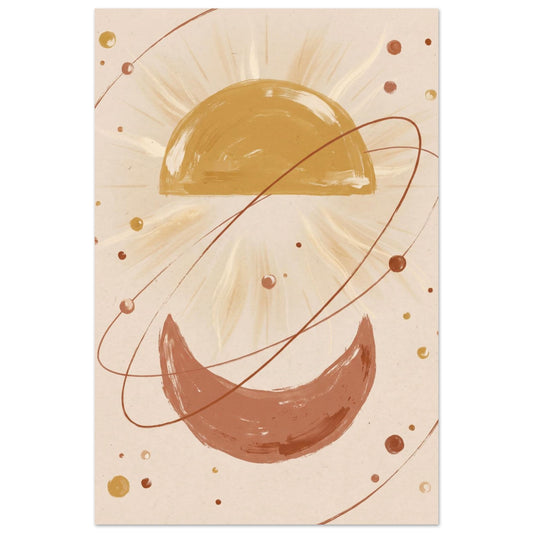
Wall art is where a boho room finds its focus, because all that texture down low needs something to anchor the eye up high. Boho wall art tends to lean warm and organic: earthy abstracts, botanical and line-art prints, soft landscapes, and globally inspired motifs in muted, sun-faded tones. The big question is usually 1 piece or a gallery. A single large print works over a bed or sofa and keeps a busy room calm. A small gallery of 3 to 5 prints suits boho's collected spirit, as long as the pieces share a palette so the wall reads as one idea rather than five. Frames matter more than people expect. Wood and white frames sit naturally in the warm, textural mix, while black can add a grounding contrast when a wall starts to feel washed out.
Where Boho Wall Art Shines in the Bedroom
The bedroom is the easiest room to bring boho into, and the wall above the bed is the natural starting point. Boho bedrooms run warm and soft, so art with calm, earthy color or a gentle organic line suits the mood better than anything sharp or high-contrast. One wide piece centered over the headboard balances the bed and settles the whole wall. If you want a little more interest, a pair of matching prints flanking the bed reads as intentional without crowding the space. Keep the bottom of the art roughly 6 to 10 inches above the headboard so the two feel connected rather than floating apart. For more layout options that fit a calm bedroom scheme, our bedroom wall art collection is sorted by the kind of restful look boho leans on. Soft framing, a warm palette, and a little breathing room are most of the battle.
The Boho Color Palette
Color is what separates boho from a plain neutral room, and it follows a loose 3-part logic. Start with a warm, calm base on the walls and big furniture, usually white, cream, oatmeal, or soft beige, so the busier pieces have room to breathe. Layer in earth tones next: terracotta, rust, ochre, olive, and warm browns carry most of the boho feeling. Then add 1 or 2 accent colors as pops, often a jewel tone like deep teal, emerald, or burnt orange, kept to cushions, art, or a single textile. The trick designers repeat is to hold the whole room to a handful of hues that get along, rather than reaching for every color at once. A tight palette is exactly what lets you mix lots of patterns without the room turning loud.

How to Keep Boho Curated, Not Cluttered
This is the part that makes or breaks the look, and 4 habits handle most of it. First, leave empty space; aim to keep roughly 30 percent of any shelf or surface clear so the eye has somewhere to rest. Second, layer textures, not stuff. Five textures spread across a whole room feel rich, but five objects piled in one corner just look messy. Third, group small items in odd numbers, usually threes, and vary their heights so a vignette feels arranged rather than scattered. Fourth, hold to your palette; a cohesive color story is what keeps a mix of patterns from tipping into chaos. The difference between boho and a cluttered room is not the amount of stuff, it is the intention behind it. Edit as you go, and when a surface starts to feel busy, take one thing away rather than adding another.
Is Boho Still in Style?
Yes, and it has more staying power than most trends. Boho has cycled in and out for over 50 years, since it practically defined the 1970s, but it keeps coming back because it bends to whatever feels current. The reason it has held for the past several years is simple: people want rooms that feel personal and lived-in rather than showroom-perfect, and boho is built for exactly that. The version on the rise now is the calmer, modern read, heavier on neutrals and natural materials and lighter on loud pattern, which makes it easier to live with long term. As long as the look rewards collecting pieces you actually love over time, it tends to age well rather than date.
How Sparkycare Fits a Boho Room
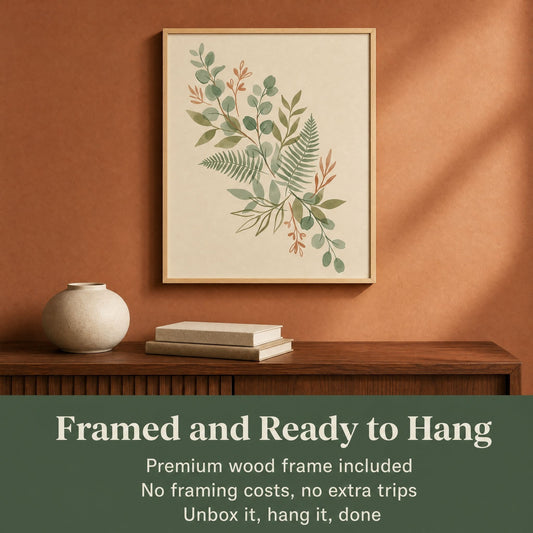
Boho rewards art that feels warm and organic, and that is the kind of piece worth choosing carefully. Sparkycare pieces are printed with fade-resistant, archival-quality inks and, in the framed option, come in solid pine frames rather than MDF, with a shatterproof plexiglass front so a piece over the bed stays safe. There is a full size range up to 28x40 inches and 4 frame colors, White, Natural Wood, Dark Wood, and Black, so you can match the soft framing a boho wall wants. Every order ships with a Certificate of Authenticity and a 30-Day Money-Back Guarantee. Browse warm, earthy designs in the boho wall art collection, and if you are still working out scale before you commit, our guide to how to choose wall art size walks through it.
Boho Style FAQ
What is the difference between boho and bohemian?
Almost nothing. Boho is just the shortened form of bohemian, and most people use the two as the same thing. If there is any split, boho often points to the lighter, more curated modern version, while bohemian can suggest the older, bolder, more colorful look. In everyday use, they describe the same eclectic, lived-in style.
What colors are considered boho?
Boho leans on warm, earthy tones: terracotta, rust, ochre, mustard, olive, and warm browns, usually over a calm base of cream, beige, or white. From there it adds 1 or 2 jewel-tone pops like deep teal or emerald. The palette stays warm and is held to a handful of hues that work together.
How do you make a boho room not look messy?
Keep about 30 percent of surfaces empty, layer textures instead of piling on objects, group small items in odd numbers at varied heights, and hold everything to one cohesive palette. Boho looks curated, not cluttered, when each piece is there on purpose. When a surface feels busy, remove one thing rather than add another.
Is boho wall art the same as abstract art?
Not quite. Boho wall art often includes earthy abstracts, but it is broader: botanical prints, organic line art, soft landscapes, and globally inspired motifs all fit, usually in warm, muted tones. Abstract art can be boho when the palette is right, but plenty of boho pieces are not abstract at all.